
A Canada visitor visa document checklist is the set of proof Immigration, Refugees and Citizenship Canada (IRCC) reviews to decide if you’re a genuine temporary visitor. The core items include identity, finances, travel purpose, and ties to home. From our Suite 403 Mississauga office at 218 Export Blvd, we prepare complete files so your application isn’t delayed.
By Ask Era Immigration — RCIC-led Canadian immigration consultancy, Suite 403 Mississauga
Last updated: May 1, 2026
At a Glance: Summary
Bring a valid passport, completed IRCC forms, two compliant photos, biometrics (if required), proof of funds, travel itinerary, purpose-of-travel evidence, ties to home, and any invitations or employer letters. Organized, consistent documents prevent delays and refusals, especially for family, business, and super visa cases.
Here’s the quick view you can use before you start gathering papers. If anything is missing or unclear, we’ll help you resolve it before you submit.
- Identity: Valid passport, previous visas, and travel stamps
- Forms: Core application + family information forms
- Photos: Two recent, IRCC-spec photographs
- Biometrics: Fingerprints/photo at a VAC if required
- Funds: Recent bank statements and income proofs
- Purpose: Itinerary, bookings, conference or tourism details
- Ties: Job letters, property records, family obligations
- Invitations: Host letter, status in Canada, and address
- Travel insurance: Strong risk reducer for visitors
- Minors: Consent letters, custody papers where relevant
- Business visitors: Meeting invites, employer letters
- Super visa: Medical insurance + relationship proofs
For deeper details and in-context examples, see our Visitor Visa service overview and keep this guide open while you prepare.
What Is a Visitor Visa Document Checklist?
A visitor visa document checklist is the structured list of proofs IRCC uses to confirm identity, temporary intent, financial capacity, and travel purpose. It translates eligibility rules into tangible evidence—passports, forms, funds, and ties—so an officer can quickly verify that you’ll visit Canada and depart on time.
Think of the checklist as your application’s blueprint. It ensures nothing critical is missed and that your story is clear, consistent, and verifiable.
- Identity and history: Passport, visas, entry/exit stamps demonstrate genuine travel behavior.
- Eligibility evidence: Forms and biometrics confirm who you are and enable background checks.
- Temporary intent: Job, family, and property proofs show you will return home.
- Purpose and logistics: Itineraries, bookings, and host invites explain why you’re visiting and how you’ll manage the trip.
In our experience preparing hundreds of visitor files, strong checklists reduce back-and-forth and make reviews faster and smoother.
Why These Documents Matter
Your visitor visa documents are how officers assess credibility: identity, temporary intent, and ability to support your trip. Clear, consistent documents lower refusal risk and help officers decide quickly. Weak or missing evidence often leads to questions, delays, or denial.
Officers don’t interview most applicants. Your file must answer the key questions on its own. The tighter the package, the fewer doubts.
- Identity clarity: A valid passport with readable biographic data is non-negotiable.
- Two compliant photos: Proper size and background align with specification standards.
- Biometrics validity: Often valid for up to 10 years once given, which can simplify future travel formalities.
- Financial sufficiency: Bank statements covering the recent 3–6 months give officers a realistic picture of capacity.
- Return intent: Employment letters and property records make your timeline believable.
We map your profile to the required documents, fix inconsistencies, and preempt common objections, so your narrative is solid from page one.
How the Visitor Visa Application Works in 2026
The 2026 process is largely digital: complete forms, upload evidence, pay fees, give biometrics at a VAC if required, and wait for a decision. In Suite 403 Mississauga (Regional Municipality of Peel), we assemble, verify, and submit files to avoid avoidable delays.
Use this step-by-step outline to structure your application. You can adapt it whether you’re touring, visiting family, or attending business meetings.
- Confirm eligibility: Determine if you need a TRV or only an eTA based on nationality and travel mode.
- Gather documents: Identity, funds, ties, and purpose evidence (see the full checklist below).
- Complete forms: Application and family information forms with accurate, consistent details.
- Create/Use your account: Submit online, upload scans, and keep filenames logical.
- Biometrics: Book a VAC appointment if required; keep the receipt in your records.
- Tracking: Monitor account messages; respond promptly if more info is requested.
- Decision and passport: If approved, follow instructions to finalize your visa label or travel authorization.
Local considerations for Suite 403 Mississauga
- Plan biometrics/VAC travel around traffic near Hurontario St At Derry Rd; book morning slots when possible.
- Winter travel can disrupt schedules. Build extra days for biometrics or courier returns during storms.
- If you’re being hosted in Peel, make sure host letters list the full address and phone; confirmations are easier when details match local records near the HWY 407 Park and Ride.
Need help organizing? Our RCIC team streamlines the flow and pre-checks every file before submission.
Visitor Visa Documents Required: The Full Checklist
Gather identity, forms, photos, biometrics (if required), proof of funds, purpose-of-travel, ties to home, invitation or employer letters, insurance, and special documents for minors or business travel. Present clean scans, consistent dates, and matching addresses to avoid delays.
Below is a practical, field-tested checklist we use at Ask Era Immigration. Tailor it to your situation and country of residence.
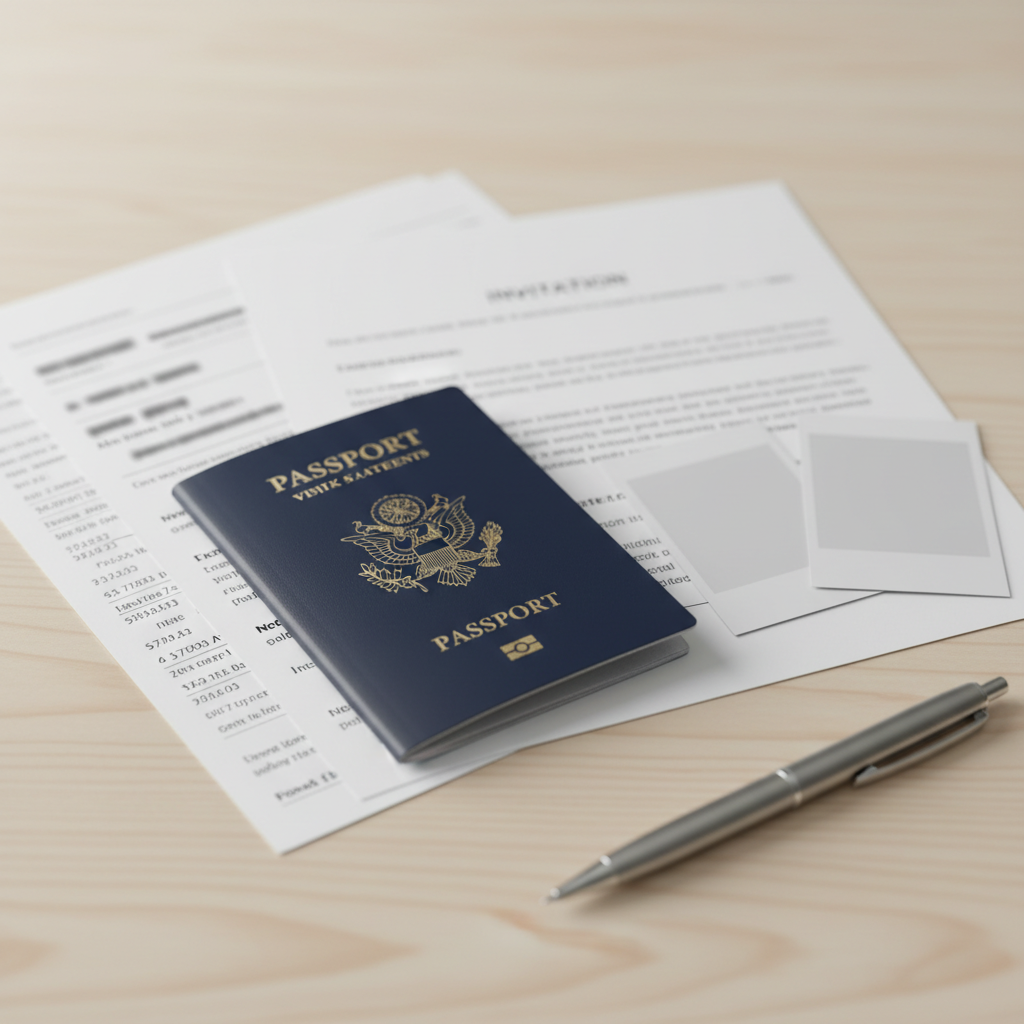
- Passport and identity
- Current passport with at least one blank page; include any expired passports with travel history.
- Government ID (if applicable) supporting name/date of birth consistency.
- Previous visas and entry/exit stamps demonstrating compliant travel.
- Application forms
- Visitor application form with accurate biographic details.
- Family information form listing all immediate family as instructed.
- Schedule(s) or country-specific supplements, if applicable.
- Photographs
- Two identical photos taken within the last 6 months.
- Neutral expression, light background, and required dimensions (commonly 35 mm x 45 mm).
- Print studio name and date on the back if requested; keep digital copies too.
- Biometrics
- Biometrics letter (if issued) and appointment confirmation for the VAC.
- Receipts confirming completion; biometrics can remain valid for years, reducing repeats.
- Proof of funds
- Bank statements for the recent 3–6 months; include account holder name and running balances.
- Employment letter stating role, tenure, and approved leave period.
- Pay slips, tax returns, or business registration for self-employed travelers.
- Purpose of travel
- Tourism: itinerary, hotel bookings, and planned activities (even rough plans help).
- Family visit: invitation letter, proof of relationship, and host’s Canadian status.
- Business: conference registration, meeting invites, and employer support letter.
- Ties to home country
- Employment contract, enrollment letter for students, or proof of ongoing study.
- Property title/lease, utility bills, or family responsibilities that require your return.
- Return flight intent (not always required but helpful when credible).
- Invitation letter (if hosted)
- Host’s full name, address, phone, relationship, and visit dates.
- Host’s proof of status in Canada and recent proof of residence.
- Travel insurance
- Policy showing your name and coverage period matching travel dates.
- Emergency medical coverage is wise for all visitors and required for certain cases like the super visa.
- Special cases
- Minors: parental consent letter(s), custody papers, and birth certificate.
- Frequent travelers: a travel log summary to clarify complex histories.
- Medical visits: appointment letters and clinical summaries where appropriate.
Tip: Keep filenames short and descriptive (e.g., “Funds_Bank_Jan-April.pdf”). Consistent naming helps officers navigate your package quickly.
Types and Scenarios: What Changes
Tourists, family visitors, business visitors, and super visa applicants all share a core checklist, but evidence style changes. Family visits prioritize relationship proofs, business visits center on employer letters and meeting invites, and super visas require specific medical insurance and family relationship documentation.
Match your evidence to your trip profile so intent is obvious from the first page.
- Tourism: emphasize itinerary, bookings, and funds for activities.
- Family visit: relationship documents, host status, and detailed invitation letter.
- Business visitor: employer letter, conference details, and meeting confirmations.
- Minor travelers: consent letter(s) and custody records when applicable.
- Super visa: parent/grandparent relationship proofs plus required medical insurance.
If you’re weighing a parent/grandparent route, review our super visa guidance for the additional medical insurance and relationship proof requirements.
Best Practices to Avoid Delays
Keep documents consistent, legible, and logically named; align dates across forms, bookings, and letters; and explain any gaps in employment, funds, or travel. Proactive clarification transforms weak points into strengths and accelerates decisions.
Over years of RCIC practice, we’ve found small fixes make outsized differences. Here’s what we refine on nearly every file:
- Explain anomalies: add a one-page letter for job gaps or sudden deposits.
- Use recent statements: 3–6 months of banking is the practical baseline.
- Match contact details: host address and phone should match utility bills or leases.
- Photo compliance: retake images if background or size is off-spec.
- Single source of truth: keep a master “facts” sheet so dates never conflict.
When details align across documents, officers can verify faster—and that’s exactly what you want.
Tools and Resources
Use a master checklist, file-naming convention, and secure cloud folder. Add a timeline tracker for forms, biometrics, and travel bookings. For insurance or legal context, consult trusted providers, and keep your RCIC in the loop.
Practical resources to keep your file clean and on track:
- Ask Era’s Visitor Visa page for scope and support: visitor visa overview.
- Insurance primers that clarify coverage considerations for visitors: see this visitor insurance overview.
- Super visa insurance has distinct requirements; preview them here: super visa insurance requirements.
- Legal perspective on immigration categories to orient first-time travelers: immigration permits explained.
- Related pathways if your plan changes later: explore Study Visa options or broader services on our services hub.

Soft CTA: Need a second set of eyes? Book a quick document review with our RCIC team; we’ll flag risks before you submit.
Case Studies and Real-World Examples
Strong files tell a simple, verifiable story. In our Mississauga practice, clarifying funds, adding host evidence, and aligning dates routinely turns borderline cases into approvals. The difference is often one well-crafted page that explains context.
Here are anonymized snapshots that map to typical scenarios we see at 218 Export Blvd, Suite 403 Mississauga.
- Tourist couple with uneven balances: We added a brief note explaining a recent property sale and attached the deed. We also provided a day-by-day itinerary. The narrative made sense; decision followed without extra questions.
- Parent visiting for a birth: Invitation listed full Peel address and phone, plus a doctor’s tentative due date note and temporary childcare plan. The purpose and timeline were crystal clear.
- Business visitor with back-to-back meetings: We organized employer letters and meeting invites chronologically and highlighted the non-permissible work guidance. The officer could see it was a short, structured trip.
- Student’s family visit: We included the student’s enrollment letter and tuition receipt, linking the timing to a school break. Return intent and purpose aligned naturally.
These examples share a pattern: simple, documented explanations that anticipate an officer’s next question.
Comparisons and Common Alternatives
Visitor visas, super visas, and eTAs serve different travelers. The visitor visa is proof-heavy for many nationalities; the super visa adds mandatory medical insurance and parent/grandparent relationship proofs; the eTA applies to visa-exempt air travelers with lighter documentation.
| Pathway | Who it’s for | Core documents | Notable extras |
|---|---|---|---|
| Visitor visa (TRV) | Visa-required nationals | Passport, forms, photos, biometrics, funds, ties, purpose | Host letters/business invites as applicable |
| Super visa | Parents/grandparents of Canadians/PRs | All TRV items | Mandatory medical insurance + relationship proofs |
| eTA | Visa-exempt air travelers | Passport and online authorization | Light documentation; check eligibility first |
| Business visitor | Short, non-permissible-work trips | TRV/eTA rules by nationality | Employer letters + meeting/conference confirmations |
If you may study or work later, bookmark our Study Visa page and regional pathways like Saskatchewan Immigration for future planning.
Frequently Asked Questions: Visitor Visa Documents
Most applicants need a passport, IRCC forms, photos, biometrics (if required), proof of funds, travel purpose, ties to home, and invitations where relevant. The exact mix varies by your nationality and reason for travel.
What are the Canada visitor visa documents required for tourists?
Tourists typically provide a valid passport, completed forms, two compliant photos, proof of funds for the full stay, a basic itinerary with accommodations, and evidence of ties to home such as employment letters or property records. Add prior visas and travel stamps to reinforce travel history.
Do I need an invitation letter for a visitor visa?
Not always. If you’re staying with a host, a clear invitation helps: include the host’s full name, address, phone, relationship, and visit dates, plus proof of status in Canada. For hotels or tours, solid bookings and a realistic itinerary can be enough.
How many months of bank statements should I include?
Provide recent statements covering at least 3 months, and up to 6 months for clearer trends. Show consistent balances and note any unusual deposits with a short explanation or supporting document.
Are biometrics required for a Canada visitor visa?
Many applicants must give biometrics at a Visa Application Center. Once given, biometrics often remain valid for up to 10 years, which can reduce repeat appointments for subsequent applications.
What’s different for a super visa file?
A super visa has the standard visitor items plus mandatory medical insurance and proof of the parent/grandparent relationship to the Canadian citizen or permanent resident. The invitation and family ties evidence are typically more detailed.
Key Takeaways
Organize identity, funds, purpose, and ties into a clean, consistent package. Add clarifying notes for anomalies, and ensure photos, forms, and dates align. That coherence speeds reviews and lowers refusal risk.
- Visitor visa decisions rely on documents—not interviews—so clarity is crucial.
- Bank statements (3–6 months), employer letters, and itineraries make intent credible.
- Invitation letters should match host documents and local addresses.
- Insurance is smart for tourists and required for super visas.
- A short explanation letter can turn a weakness into a strength.
Conclusion and Next Steps
A complete, consistent checklist is the fastest path to approval. If any document is missing or unclear, resolve it before you submit. Our RCIC team in Mississauga builds strong, officer-friendly files that minimize back-and-forth.
Ready to move? Start with the summary above, draft your personal checklist, and gather 3–6 months of financials. If you want a professional review, our team at 218 Export Blvd, Suite 403 Mississauga can align your documents, draft host letters, and prepare a targeted explanation note. For neighboring immigration pathways, explore our Visitor Visa page, our services hub, and study options via Study Visa. Book a discovery session in Suite 403 Mississauga when you’re ready.