
Canada permanent residency is a legal status that lets you live, work, and study anywhere in Canada with long-term stability and access to most social benefits. From our Suite 403 Mississauga office at 218 Export Blvd, Ask Era Immigration helps applicants choose the right pathway and prepare a complete file to maximize approval in 2026.
By Ask Era Immigration • Last updated: 2026-06-09
Above-Fold Overview and Table of Contents
Use this 2026 field-tested playbook to plan, apply, and land Canadian permanent residence with confidence. We cover Express Entry, PNPs, family sponsorship, study-to-PR, and investor routes—plus checklists, timelines, and Mississauga-specific tips—to help you avoid delays and improve your chances of approval.
This complete guide is written for skilled workers, international students, families, and business owners planning Canadian PR. It blends official process steps with practical preparation tactics we use daily as an RCIC-led consultancy in the Regional Municipality of Peel.
- What permanent residency means and how it differs from a work or study permit
- Express Entry, CEC, FSW, PNP, family sponsorship, and study-to-PR explained
- Actionable best practices to strengthen your profile and documents
- Critical timelines, biometrics, medicals, PCC, and post-landing essentials
- Local considerations for Suite 403 Mississauga applicants
- What is PR?
- Why PR matters in 2026
- How PR works: step-by-step
- PR pathways
- Best practices
- Tools and resources
- Case studies
- FAQ
- Conclusion
What Is Canada Permanent Residency?
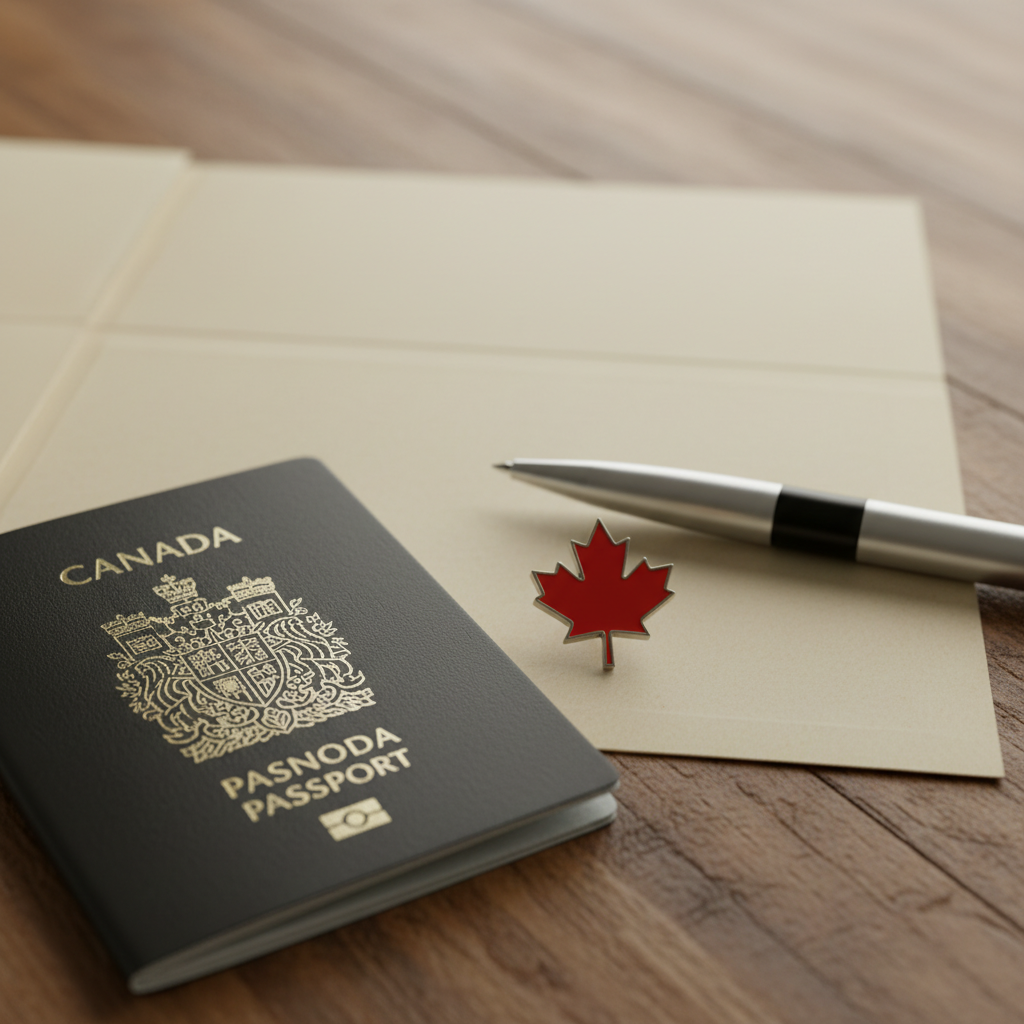
Canada permanent residency (PR) is a long-term immigration status that allows you to live, work, and study anywhere in Canada, travel in and out, and access most social benefits. PR holders are not citizens but can apply for citizenship after meeting residency and eligibility requirements.
PR is your bridge to stability in Canada. You receive a PR card as proof of status, can change employers freely, and may sponsor eligible family in the future. Unlike temporary permits, PR does not tie you to a single institution or employer.
- Core rights: live anywhere in Canada, work for any employer, study at any level, and access most social benefits.
- Residency obligation: generally maintain a minimum physical presence in Canada over a five-year period to keep PR.
- Path to citizenship: after meeting eligibility (including physical presence), you may apply to become a Canadian citizen.
At Ask Era Immigration, we guide applicants through program selection, documentation, and portal submission so their PR file is decision-ready and consistent with current IRCC standards.
Why Canada Permanent Residency Matters in 2026
In 2026, permanent residence offers stability during evolving policy cycles, targeted Express Entry draws, and shifting labor needs. PR secures career mobility, family security, and long-term planning power—benefits temporary status can’t match when rules tighten or caps fluctuate.
Policies and selection priorities adjust each year. Category-based draws, provincial targeting, and labor trends can reward certain skills one quarter and shift the next. Permanent residency helps you plan beyond short-term program changes and removes employer or school dependency.
- Career flexibility: change employers or sectors freely; pursue promotions or entrepreneurship without permit constraints.
- Family stability: sponsor eligible family and access vital social supports; children can benefit from local schooling.
- Mobility and security: travel with confidence using your PR card and maintain continuity even if temporary policies shift.
- Citizenship track: once eligible, advance from PR to citizen for voting rights and a Canadian passport.
We’ve seen applicants move from contract dependence to stable careers within months of landing PR. For students, PR opens doors to permanent roles and leadership tracks that often aren’t accessible under temporary work authorization alone.
How Canada PR Works: Step-by-Step
The PR journey follows a consistent arc: choose an eligible pathway, gather documents, submit a complete application, provide biometrics and medicals, and wait for a decision. Solid planning—especially for Express Entry or a PNP—can shave weeks off avoidable back-and-forth.
Most applicants follow five building blocks. While each pathway has unique rules, these steps help you plan from day one and avoid rework that leads to delays.
- Choose your pathway: Express Entry (CEC/FSW), a Provincial Nominee Program, family sponsorship, or a business/investor route. Students often pursue study-to-PR timelines.
- Evaluate eligibility: confirm TEER/NOC, language results, education equivalency, and settlement factors. Identify quick wins to improve scores or fulfill criteria.
- Prepare documents: passports, education assessments, language tests, employment letters, proof of funds (where applicable), police certificates (PCC), and medical exams.
- Apply through the correct portal: submit a complete, organized file with consistent dates and evidence. Follow program-specific checklists.
- Complete biometrics and medicals: respond promptly to communications and track your application to address any document requests.
| Pathway | Who it fits | Core requirement | Typical sequence | Notes |
|---|---|---|---|---|
| Express Entry (CEC/FSW) | Skilled workers and graduates with qualifying experience | Language tests, ECA (if needed), qualifying TEER/NOC | Profile → pool → ITA → e-APR → biometrics/medicals | Category-based draws can shift cutoffs and priorities |
| Provincial Nominee Program | Candidates with a province-specific connection or occupation | Meet stream criteria; obtain nomination | Expression of interest → nomination → PR application | Nomination can complement Express Entry profile |
| Family Sponsorship | Spouses, partners, dependent children, eligible parents/grandparents | Relationship proof and sponsorship eligibility | Sponsorship file → assessment → biometrics/medicals | Document quality and consistency are critical |
| Study-to-PR | International students progressing to skilled work | DLI program → PGWP → qualifying Canadian experience | Study → graduate → skilled job → PR route (often CEC) | Program choices impact PR prospects later |
If you want a deeper dive on system mechanics, our in-house primer on Canada PR & Express Entry and our stepwise PR application process guide outline how we structure successful submissions.
Local considerations for Suite 403 Mississauga
- Plan appointments near Hurontario St At Derry Rd to coordinate biometrics/medicals with minimal commute from 218 Export Blvd.
- Winter rush periods and holiday closures can slow appointment availability; book testing and PCC early to avoid gaps.
- If you attend community events near Mississauga’s Ram Mandir, gather local references and experience letters promptly to keep timelines intact.
Types of Canada PR Pathways (Express Entry, PNP, Family, Study-to-PR, Investor)
Canada offers multiple PR routes: Express Entry (CEC/FSW), Provincial Nominee Programs, family sponsorship, study-to-PR via PGWP and skilled work, and business/investor options. The best path fits your education, work history, language scores, provincial ties, and family situation.
Express Entry (CEC and FSW)
- Canadian Experience Class (CEC): for candidates with qualifying Canadian skilled work experience, often post-graduation via PGWP.
- Federal Skilled Worker (FSW): for skilled workers abroad or in Canada who meet selection factors and language thresholds.
- Optimization: language retakes, ECA upgrades, and targeted provinces can improve pool competitiveness.
For a detailed walkthrough, bookmark our Express Entry 2026 guide, including how category-based rounds affect eligibility planning.
Provincial Nominee Programs (PNPs)
- Why PNPs matter: they align talent with regional labor needs and can amplify a strong but borderline profile.
- Targeting: Ontario, Alberta, British Columbia, Saskatchewan, Manitoba, Nova Scotia, New Brunswick, Newfoundland and Labrador, and PEI operate unique streams.
- Next step: see our explainer on how to apply for Ontario PNP via Express Entry.
Family Sponsorship
- Who qualifies: spouses/partners, dependent children, and, in designated programs, parents/grandparents.
- Strengthen evidence: relationship documents, cohabitation proof, and communication history must be consistent and well-organized.
Study-to-PR Strategy
- Start smart: choose a DLI program with strong employment outcomes; align your field with in-demand TEER/NOC codes.
- Leverage PGWP: accrue qualifying skilled experience that translates into CEC or PNP eligibility.
- Resource: our guide to student immigration in Canada lays out program selection and post-graduation steps.
Business/Investor Routes
- Who it fits: entrepreneurs and investors willing to meet program criteria across specific provinces or federal pilots.
- Reality check: requirements vary considerably; feasibility planning is critical before committing.
Best Practices to Boost Your Odds
Improve your PR odds by targeting the right pathway, perfecting documents, retaking language tests strategically, and aligning job titles with TEER/NOC. Early planning for PCCs, medicals, and references prevents avoidable delays and supports a coherent, credible story.
Score and eligibility gains
- Language retakes: a single band improvement can meaningfully impact competitiveness in Express Entry pools.
- ECA review: ensure the highest equivalency is recognized; consider evaluating additional credentials if relevant.
- TEER/NOC alignment: confirm your duties match the selected code and ensure employment letters reflect them.
Documentation discipline
- Consistency first: dates, names, and job titles must align across forms, letters, and IDs.
- Letters that land: duties, hours, compensation format, and supervisor contacts should meet typical evidentiary expectations.
- Proactive checks: order police certificates early and schedule upfront medicals where applicable to compress timelines.
Strategic pathway choice
- PNP synergy: a provincial nomination can complement an Express Entry profile and signal regional fit.
- Study-to-PR design: select programs that lead to skilled roles; map your PGWP toward qualifying experience.
- Family routes: where eligible, sponsorship can be more direct than points-based competition.
Soft CTA: Want a second set of eyes on your file? Book a profile assessment with our RCIC-led team at Ask Era Immigration in Mississauga. We’ll flag risks, tighten documents, and sequence steps so you apply with confidence.
Tools and Resources We Recommend
Use official eligibility checkers, language and ECA providers, and secure document trackers. Pair them with an internal checklist, dated file names, and a communications log to keep your PR case organized, verifiable, and submission-ready.
- Eligibility mapping: outline program criteria line-by-line; note which documents prove each element.
- Language and ECA vendors: schedule tests with built-in retake time; ensure ECA reports arrive before your target apply window.
- Document tracker: maintain a single sheet for PCCs, medicals, biometrics, and references with requested/received dates.
- Submission prep: test your scans for clarity and legibility; combine multi-page PDFs logically.
- Internal guides: our PR document checklist and PR timeline explainer outline what strong files include.

For external perspectives on application flow and expectations, see this practical overview and process walk-through from a legal publisher: permanent residency application process, a concise how to apply for permanent residency, and a complementary process guide.
Case Studies and Real-World Examples
The strongest PR outcomes come from pairing the right pathway with impeccable evidence. These brief scenarios from our Mississauga-based practice show how targeted adjustments—often small—produce approvals faster and with fewer document requests.
International graduate to CEC PR
- Profile: graduate from a DLI business program in Ontario, working under PGWP in a TEER 1 role.
- Action: retook language test to lift scoring category; rewrote job letter to match TEER duties precisely.
- Outcome: Express Entry profile became competitive; submitted e-APR with clean, consistent evidence.
Skilled worker abroad leveraging PNP
- Profile: engineer overseas with strong experience but borderline pool competitiveness.
- Action: prioritized province with matching occupational demand; filed an expression of interest and secured a nomination.
- Outcome: nomination complemented Express Entry, leading to an invitation and a smooth PR submission.
Spousal sponsorship clarity
- Profile: married couple with extensive travel history and mixed documentation.
- Action: organized communications logs, cohabitation proof, and affidavits; sequenced police certificates early.
- Outcome: comprehensive file avoided avoidable evidence requests and moved forward efficiently.
Student planning study-to-PR from day one
- Profile: international student selecting programs and campus location.
- Action: chose a DLI with strong employer links; aligned capstone project with in-demand TEER/NOC.
- Outcome: secured a skilled role under PGWP and became CEC-eligible on schedule.
Want to see how these moves apply to your situation? Our explainer on 2026 immigration changes and our ultimate Canada immigration guide connect strategy to policy updates.
Canada Permanent Residency: Frequently Asked Questions
These concise answers address the questions applicants ask most about PR in Canada—eligibility, Express Entry vs. PNP, documentation, and post-landing steps—so you can plan with clarity and avoid common mistakes.
What is the fastest way to get permanent residency in Canada?
There’s no single fastest route for everyone. Many skilled applicants succeed through Express Entry (CEC or FSW) when their language, education, and experience align. Others move faster via a Provincial Nominee Program that targets their occupation or via eligible family sponsorship where applicable.
Do I need a job offer for Express Entry?
A job offer isn’t mandatory for Express Entry eligibility, but a qualifying offer can improve competitiveness. Many applicants qualify without one by strengthening language scores, maximizing education equivalency, and aligning TEER/NOC evidence with their work history.
How do study permits lead to PR?
A typical route is DLI study → PGWP → skilled Canadian work → PR eligibility, often under CEC or a PNP. Program choice matters: fields tied to in-demand occupations can shorten the path by making it easier to secure qualifying experience after graduation.
What documents cause the most delays?
Inconsistent employment letters, late police certificates, and missing travel histories are common culprits. Fix this by standardizing dates and titles across forms, ordering PCCs early, and keeping a thorough address and travel log that matches passport stamps and visas.
Conclusion and Next Steps
Successful PR applications tell a coherent, well-evidenced story. Choose the right pathway, prove every requirement cleanly, and submit a complete, organized file. With planning and expert review, your chances of approval rise substantially.
Key Takeaways
- Pick the pathway that fits your background—don’t force a poor match.
- Language, ECA, and TEER/NOC proof often determine competitiveness.
- Consistency across forms and letters prevents avoidable delays.
- Schedule PCCs, medicals, and biometrics early to stay on track.
Action steps
- Map your eligibility against Express Entry, PNP, and family routes.
- Use our PR checklist to gather clean, verifiable evidence.
- Review our PR process guide and Express Entry explainer.
- Book a profile assessment with Ask Era Immigration to finalize your plan.
Ready to move? Schedule a consult with our RCIC-led team at 218 Export Blvd, Suite 403 Mississauga. We serve clients across the Regional Municipality of Peel and worldwide via secure online appointments.
Related resources from Ask Era
Build depth with focused explainers. These internal resources expand on eligibility, documentation, Express Entry mechanics, and timelines to help you file a decision-ready PR application the first time.
Deepen your plan with our guides to qualifying for PR in 2026, tracking your PR timeline, and navigating Ontario PNP via Express Entry. For students, see our student immigration overview and the complete Express Entry 2026 guide.