
Canada citizenship services process refers to the end-to-end path to become a Canadian citizen—from eligibility and application to the test, interview, decision, and oath ceremony. At our Suite 403 Mississauga office (218 Export Blvd), Ask Era Immigration guides applicants through each step, preparing documents, coaching for the test, and coordinating final oath logistics.
By Ask Era Immigration • Last updated: May 18, 2026
Quick Summary
Canadian citizenship is granted after you meet residency, language, and knowledge requirements, submit a complete application, pass the test/interview, and take the Oath. The process is structured and document-heavy. With organized evidence and timely responses, most eligible applicants move from file submission to oath efficiently.
This complete guide explains how Canadian citizenship works in 2026, what to prepare, and where mistakes happen. You’ll learn practical checklists, timelines, and interview/test tips our RCIC-led team uses daily to help applicants move from permanent resident to citizen without preventable delays.
- What citizenship means and who’s eligible
- How the step-by-step process works in 2026
- Documents, forms, and proof you must assemble
- Interview and test preparation strategies that work
- Oath ceremony expectations and what to bring
- Local tips for Suite 403 Mississauga (Regional Municipality of Peel)
What Is Canadian Citizenship?
Canadian citizenship is a legal status that grants full civic rights and obligations, including voting, holding a Canadian passport, and eligibility for certain public roles. Most permanent residents qualify by meeting physical presence (1,095 days in five years), language, and knowledge criteria, then passing the test/interview and taking the Oath.
In plain terms, citizenship is the final milestone for many immigrants. You retain permanent resident benefits while gaining additional rights like the vote, unrestricted reentry on a Canadian passport, and full participation in civic life. The Canada citizenship services process translates rules into a clear, verifiable pathway.
Why this matters now
- Mobility and security: A Canadian passport enables visa-free or visa-on-arrival access to many countries and streamlined reentry.
- Stability for families: Citizenship secures status for you and, in many cases, eases pathways for your children (subject to rules).
- Confidence in the future: Once you’re a citizen, you cannot lose status for time spent abroad the way PRs risk residency obligation issues.
Core legal criteria, simplified
- Physical presence: At least 1,095 days within the past five years before applying.
- Taxes filed: Typically three taxation years within that five-year window, if required under the Income Tax Act.
- Language: Demonstrate English or French at CLB/NCLC 4 (ages 18–54).
- Knowledge: Pass the citizenship test on rights, responsibilities, history, and institutions (ages 18–54).
If any of these create uncertainty, our team reviews your history (travel, work, studies) and builds a documentation plan that aligns with current forms and guidance in 2026.
Why Citizenship Matters in 2026
Citizenship in 2026 enhances mobility, resilience to travel disruptions, and stability amid evolving immigration rules. It also strengthens family planning and long-term prospects in Canada. For eligible PRs, applying now converts years of settlement into permanent civic inclusion.
We see three practical benefits play out for clients every week. First, the Canadian passport simplifies international trips and emergency travel. Second, citizens remove PR compliance risks (like maintaining residency amid overseas work). Third, it cements local opportunity: civic participation, broader public roles, and confidence in multiyear plans.
Common scenarios we help with
- Frequent travelers: Verifying days in Canada accurately with entry-exit records when work demands global travel.
- Students-to-PRs: Aggregating time as a student and worker to confirm presence and tax filing history.
- Families: Synchronizing multiple applications to streamline scheduling of tests and the oath.
Because requirements are objective, well-kept records and a consistent timeline are your best assets. We organize these from the outset to prevent back-and-forth later.
Canada Citizenship Services Process: Step-by-Step
The citizenship process follows a defined sequence: confirm eligibility, gather documents, submit a complete application, respond to biometrics/requests, pass the test (if required), attend the interview, receive a decision, and take the Oath. Staying organized and responsive shortens overall timelines.
- Confirm eligibility: Calculate physical presence (1,095 days in five years), check language/knowledge requirements, and resolve any prohibitions.
- Collect documents: IDs, PR proof, travel history, tax evidence, language proof (if required), name change/legal docs.
- Complete forms accurately: Ensure consistency across addresses, employment, and travel dates.
- Submit application: Choose the correct channel and retain a complete copy.
- Biometrics/requests: If you receive a request, comply promptly with clear, readable scans.
- Test preparation: Study Canadian history, rights/responsibilities, and institutions; use practice tests.
- Interview day: Bring originals, be concise, and answer factually.
- Decision & Oath: Watch for the oath notice, arrange logistics, and bring required ID for the ceremony.
We map this sequence to your profile on day one. A tidy evidence file—travel records, language proof, and consistent forms—prevents avoidable delays.
Citizenship Documents Checklist (What We Actually Use)
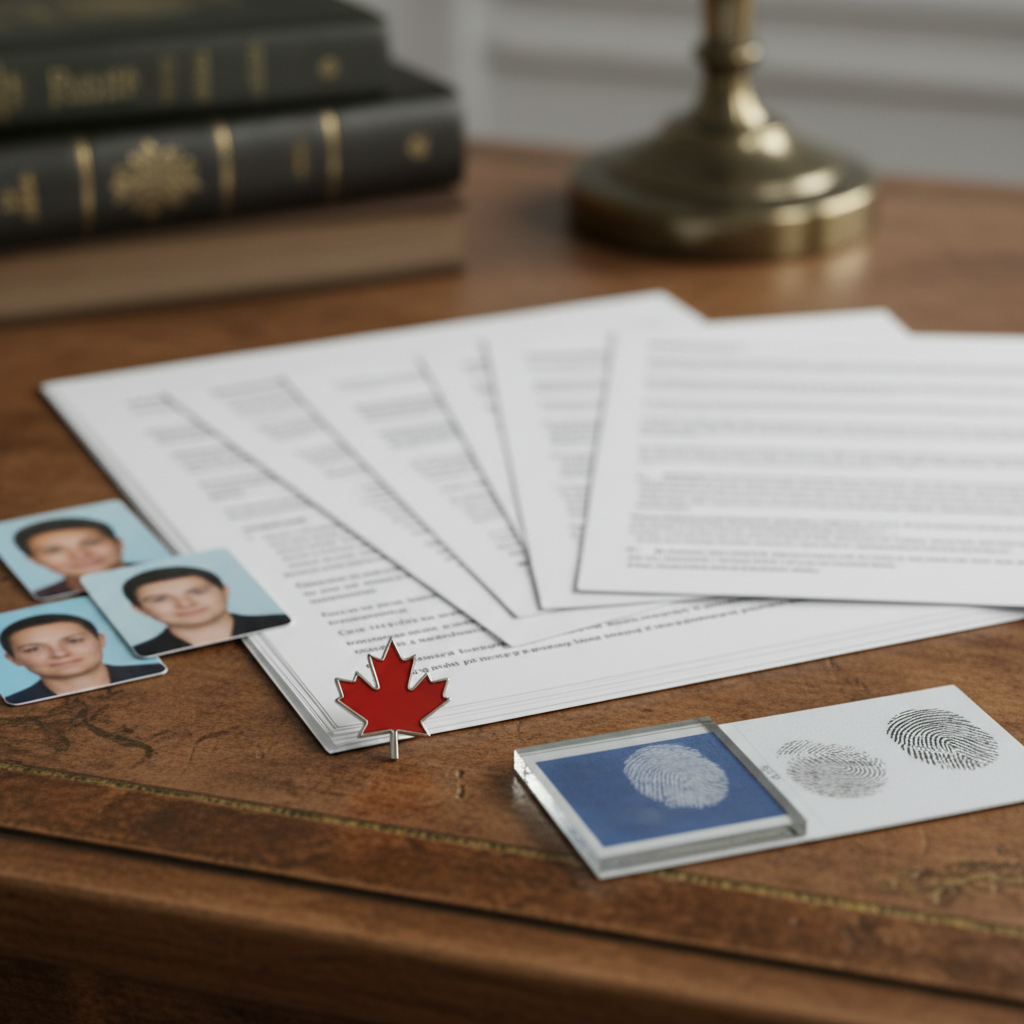
A complete citizenship file includes identity and PR proof, physical presence evidence, language documentation (if applicable), tax filings, and accurate travel history. Organize originals and clear copies by section, label consistently, and track any name changes with supporting legal records.
- Identity and PR status: PR card, COPR, passports (current and expired).
- Physical presence: Travel history printouts, entry/exit records, boarding passes, employer letters confirming work dates.
- Tax filings: Notices of assessment for three relevant tax years, if required.
- Language proof (18–54): Recognized test results, completion of eligible secondary/postsecondary programs in English/French, or equivalent documentation.
- Name/date-of-birth changes: Legal certificates, court orders, or notarial documents.
- Special cases: Custody orders for minors, proof of parentage, adoption orders, residence outside Canada in Crown service situations.
In our files, we use a consistent naming convention and an index page. This simple discipline reduces officer questions and keeps your interview focused on facts—not on searching for a page.
How Long the Process Takes in Practice
Timelines vary by volume and case complexity. Many straightforward adult applications move from submission to oath within several months once complete and responsive. The fastest paths come from error-free forms, clear evidence, and quick replies to any IRCC request.
Processing is dynamic, but certain realities hold: clean, consistent data moves faster, and missing pages or unclear scans can trigger deferrals. We plan around busy seasons by preparing earlier, keeping contact information current, and maintaining a response-ready folder for any additional documents.
For applicants whose PR journey involved Express Entry or PNP, your earlier documentation trail is a time-saver now. If you need to revisit PR records, our Express Entry document checklist and processing timeline overview are practical refreshers.
Citizenship Test and Interview: What to Expect
Adults aged 18–54 typically write a knowledge test covering history, values, institutions, and symbols. An interview validates identity, language (when applicable), and application consistency. Preparing with official guide content, practice questions, and your own timeline improves both speed and confidence.
We coach to three outcomes: accuracy, calm, and clarity. Accuracy means you’ve studied core topics and know your own file dates cold. Calm comes from rehearsal—mock Q&A sessions that mirror interview pacing. Clarity is about speaking plainly, avoiding speculation, and correcting small mistakes on the spot.
Study plan that works
- Create a 10–14 day schedule with daily topics and light review quizzes.
- Use practice questions to identify gaps; log incorrect answers and re-try after 24 hours.
- Hold one mock interview to practice concise answers and bring the right originals.
Interview day checklist
- Arrive early with originals and the same ID used in your application.
- Answer from memory; avoid speculation.
- If you don’t understand a question, ask for clarification—then answer directly.
The Oath Ceremony: Final Step to Becoming a Citizen
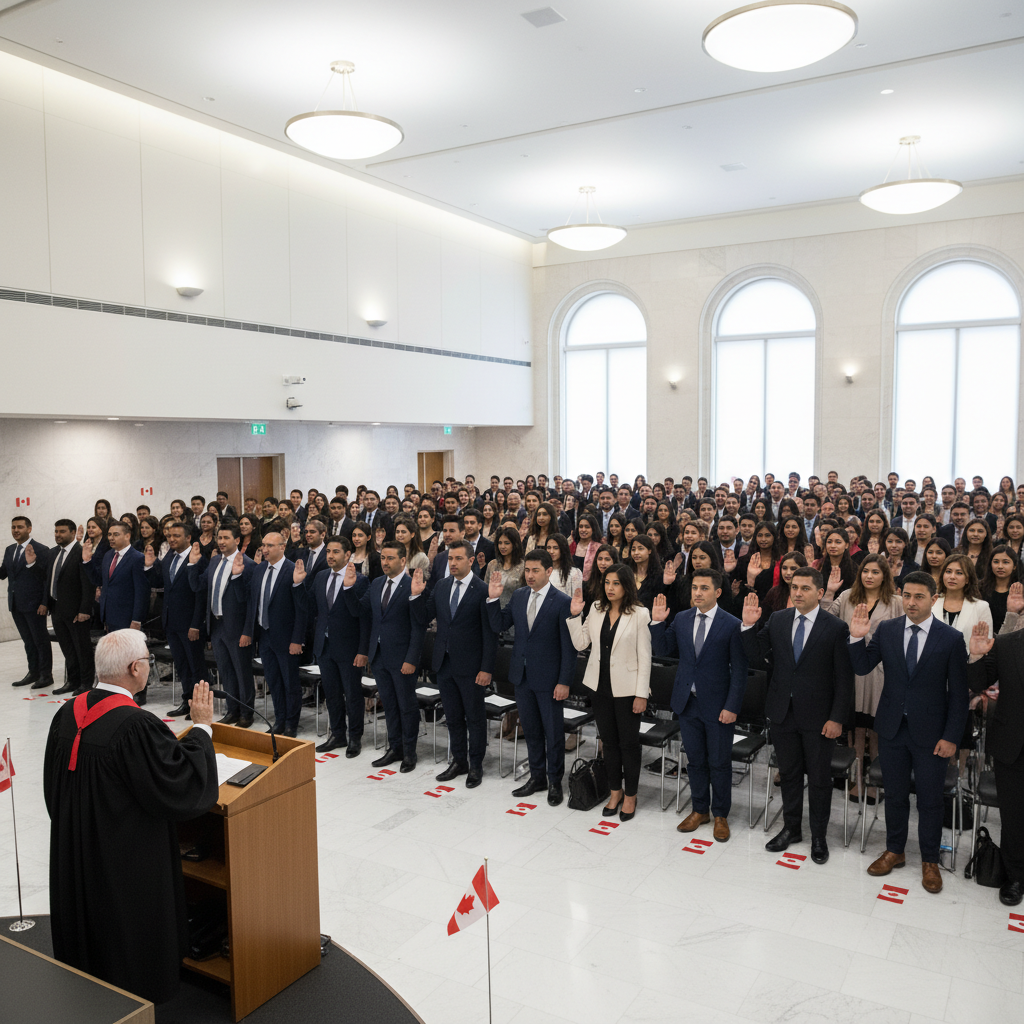
The oath ceremony is a formal event where you swear or affirm allegiance and receive your citizenship certificate. Bring valid identification and any requested documents. Plan logistics ahead so you can focus on the moment—this is your legal transition to full citizenship.
It’s an occasion to celebrate. We recommend arranging time off, travel, and any guest details in advance. Keep your certificate safe; consider immediately scanning and storing a digital copy for records. After the oath, you can begin your Canadian passport application and update key profiles.
Eligibility Nuances (Special Cases We Handle)
Certain applicants face unique rules—minors, Crown servants, applicants with prohibitions, name/date-of-birth discrepancies, or extended travel histories. Specialized documentation and careful forms resolve most of these, provided the story and evidence match across every page.
- Minors: Different test/language obligations; custody/consent documents must align.
- Crown service abroad: Presence rules may be calculated differently for qualifying service.
- Prohibitions: Past offenses or conditions can restrict eligibility until resolved.
- Extended travel: Build a precise trip log and reconcile with passport stamps and airline records.
Each nuance is solvable with preparation. Our job is to surface the nuance early and close the gap with targeted evidence.
How Ask Era Immigration Guides Your Application
We run a structured, RCIC-led process: assess your timeline, pre-check risks, assemble a complete file, prepare you for test/interview, and support logistics through the oath. Clear communication and document discipline reduce avoidable delays and keep momentum.
Our team in Suite 403 Mississauga handles citizenship alongside PR, study permits, work permits, and family sponsorships—meaning we can pull prior records, CRS notes, and PNP confirmations when they help your case. For many clients, this single-record approach removes weeks of chasing old paperwork.
- Assessment: Map presence days, taxes, language, and knowledge requirements.
- File build: Index, label, and proofread forms against supporting evidence.
- Coaching: Targeted prep for knowledge test and interview.
- Follow-through: Track requests, assist with scheduling, and prepare for the oath.
New to our services? Start with our Canadian citizenship page to see how we approach timelines and documentation.
Local Support Near Suite 403 Mississauga (Regional Municipality of Peel)
Applicants in Suite 403 Mississauga benefit from nearby transit and easy access to our office for document handoffs and coaching. Within the Regional Municipality of Peel, we plan appointments to avoid peak commute times and coordinate family files so test and oath steps stay aligned.
Local considerations for Suite 403 Mississauga
- Plan in-person meetings around peak times; the Hurontario St At Derry Rd corridor gets busy during rush hours.
- Winter months can affect travel; build buffer days around interviews or oath notices.
- For families, schedule staggered prep sessions so everyone is test-ready without conflicts.
For those using public transit, we help you structure test and oath logistics around the nearest Park & Ride options when appropriate.
Tools and Resources (2026)
Use checklists, practice tests, and organized document templates to stay on track. Maintain a running log of travel, taxes, and addresses. A shared cloud folder with labeled PDFs keeps your file consistent, readable, and ready for interview day.
- Presence day calculator to track 1,095 days in five years.
- Address/employment timeline template to maintain date consistency.
- Practice question sets aligned to the official citizenship guide.
- Document index template with naming conventions for quick retrieval.
If your citizenship file draws on earlier PR work, skim our Canada PR process guide and Express Entry eligibility checklist to refresh key records.
Process and Evidence Table (At a Glance)
This table summarizes each citizenship step with the evidence officers typically reference. Use it to verify you’ve attached the right item for every claim you make in your forms and during the interview.
| Step | What Happens | Evidence Officers Rely On | Your Action |
|---|---|---|---|
| Eligibility | Check presence, language, knowledge, taxes | Passports, travel records, tax notices, language proof | Calculate days; gather notices; confirm CLB/NCLC 4 |
| Application | Submit accurate forms and copies | Consistent addresses/employment, readable scans | Index documents; review for consistency |
| Requests | Provide biometrics or additional docs | Clear scans, originals ready | Respond quickly; keep folder updated |
| Test | Write knowledge exam (18–54) | Guide-aligned topics, invite letter | Follow a 10–14 day study plan |
| Interview | Verify identity and facts | Original IDs, consistency across forms | Answer directly; correct minor errors |
| Decision | Receive outcome | Officer notes, completeness | Watch mailbox/email for oath notice |
| Oath | Swear/affirm allegiance | Valid ID, ceremony invite | Bring ID; plan travel/time off |
Mini Case Examples (What Speeds Things Up)
Faster outcomes come from clean documentation, consistent timelines, and proactive communication. These short scenarios show how small decisions—like naming conventions and presence logs—can shave weeks off back-and-forth and keep your file moving toward the oath.
Frequent-flyer professional
A Peel-based engineer traveled monthly over three years. We rebuilt a trip ledger from airline emails and stamps, matched it to tax filings, and reconciled minor date gaps. The interview stayed focused on facts, and the oath invite followed soon after.
Student-to-worker path
A graduate who became a PR through Express Entry needed language proof confirmation. We used postsecondary transcripts and aligned addresses and jobs from co-op through full-time roles. The file sailed through test, interview, and oath.
Family synchronization
Two parents and a 12-year-old applied together. We aligned custody/consent documents, verified school enrollment dates, and booked staggered practice sessions. Their test and oath logistics stayed in sync, minimizing rescheduling.
Avoid These Common Mistakes
Most delays stem from inconsistent dates, unclear scans, missing travel entries, and slow replies to requests. Fix those four, and you’re ahead of the curve. A second review by someone not involved in data entry catches most small errors.
- Date drift: Employment and address timelines must align with travel history.
- Scan quality: Low-resolution images and cropped pages create avoidable follow-ups.
- Travel omissions: Short trips count; keep every exit/entry logged.
- Late responses: Time windows matter—set alerts and reply early.
Our internal rule: if a stranger can reconstruct your story from your index page alone, the file is interview-ready.
How Your Pathway to PR Affects Citizenship
Whether you became a PR through Express Entry, a Provincial Nominee Program, family sponsorship, or study/work transitions, your citizenship file benefits from earlier records. Reuse verified documents and timelines to accelerate eligibility checks and interview prep.
To refresh documents from your PR stage, see our PR process overview and family PR checklist. If you’re still pre-PR and planning ahead, start with the Express Entry checklist for long-term alignment.
Need Hands-On Guidance?
If you want an RCIC-led team to verify eligibility, assemble documents, and coach you through test and interview, we can help. Our Suite 403 Mississauga practice supports local and international applicants with structured, transparent steps to the oath.
Free readiness check: We’ll review presence days, taxes, and language proof, then outline an action plan. Bring your passports and notices of assessment to your first consult.
Explore our approach on the citizenship services page, then book a session that fits your schedule.
Authoritative Overviews (For Context)
For background reading on eligibility and the big-picture path from PR to citizen, use a concise set of reputable overviews. These help you cross-check terms and keep your vocabulary consistent with official usage.
For a step-by-step narrative from PR to citizenship, see this clear overview. To recap typical eligibility elements, this eligibility explainer pairs well with your checklist. If you’re still pre-PR, this PR roadmap clarifies how today’s choices affect tomorrow’s citizenship file.
Frequently Asked Questions
These concise answers cover the questions we hear most—eligibility, test timing, travel during processing, and what to bring to the oath. Each answer stands alone so you can quote or share it directly.
How many days in Canada do I need before applying?
You need at least 1,095 days of physical presence in Canada within the five years before you apply. Keep a precise trip log and reconcile it with passport stamps and airline records to avoid discrepancies at the interview.
Do I have to take the citizenship test?
Adults aged 18–54 usually must take the knowledge test and demonstrate language at CLB/NCLC 4. The test covers Canadian history, values, institutions, and symbols. A short, focused study plan of 10–14 days with practice questions works well for most applicants.
Can I travel while my citizenship application is processing?
Yes, you can travel, but keep your contact details current and monitor messages for any requests or notices. Track every trip in your presence log. If you’re invited to a test, interview, or oath, plan to return in time or request a reschedule if permitted.
What should I bring to the oath ceremony?
Bring valid identification and any documents listed in your ceremony notice. Arrive a little early, dress neatly, and plan photos with family or friends after you receive your certificate. Store a scanned copy of the certificate in a secure folder right away.
What if my addresses or employment dates don’t match my travel history?
Fix the inconsistency before you submit. Rebuild your timeline from source records—leases, employer letters, entry/exit stamps—and correct the forms. A second reviewer who didn’t enter the data usually spots small drifts right away.
Key Takeaways
Citizenship approval favors organized files, accurate timelines, and quick responses. If you meet presence, language, and knowledge requirements—and support each with clean evidence—you’ll keep your application moving and enter the oath with confidence.
- Eligibility is objective—prove each point with clear documents.
- Consistency across travel, addresses, and employment prevents delays.
- Short, focused prep beats cramming for the test and interview.
- Plan logistics early so the oath day is stress-free and memorable.
Ready to Start?
Book a consultation to verify eligibility, build your document index, and set a test/interview prep plan. We align schedules for families and coordinate oath logistics so your final step is smooth from start to finish.
Schedule with Ask Era Immigration in Suite 403 Mississauga. Bring your passports, PR documents, and notices of assessment. We’ll map your presence days, confirm language proof, and send you off with a clear checklist for the Canada citizenship services process.