

How to prepare for an immigration interview is the process of organizing proof, rehearsing clear answers, and planning logistics so an officer can verify your identity, eligibility, and intent fast. At 218 Export Blvd, Suite 403 Mississauga, Ask Era Immigration provides RCIC-led mock interviews and document audits tailored to your program.
By Ask Era • Last updated: 2026-05-14
Quick Summary
An immigration interview evaluates identity, eligibility, intent, and supporting documents. Prepare by aligning evidence to program rules, rehearsing consistent answers, and planning arrival. Ask Era Immigration in Suite 403 Mississauga (Regional Municipality of Peel) offers RCIC-led coaching and file reviews to help you present a credible, well-organized case.
Use this article to get interview-ready with a complete plan. You’ll learn how officers make decisions, what to bring, how to answer with proof, and how to avoid common pitfalls. We also include program-specific examples for study permits, work permits, Express Entry/PR, and family sponsorships—plus local travel tips for appointments in and around Mississauga.
Local considerations for Suite 403 Mississauga
- Build transit buffers around Hurontario St At Derry Rd; aim to arrive 15–30 minutes early to clear security without rushing.
- Winter months can slow traffic; schedule biometrics and medicals a few weeks earlier to avoid weather disruptions.
- If you plan to visit Mississauga’s Ram Mandir afterward, pack water and light snacks in line with venue and office rules.
Introduction
Immigration interviews confirm facts, clarify intent, and test the credibility of your story. The strongest preparation combines a labeled document kit, concise answers that match your forms, and two realistic mock interviews to reduce nerves and inconsistencies.
Most applicants worry about tricky questions or forgetting details. Here’s the thing: officers are looking for consistent facts they can verify in minutes. Your job is to make verification easy. That’s exactly what our RCIC-led coaching in Mississauga focuses on—turning complex histories into neat, evidence-first answers.
- Who this helps: study permit seekers, skilled workers, Express Entry applicants, sponsors/families, and visitor visa holders.
- What you’ll get: a 10-step prep method, printable checklists, and troubleshooting strategies for tough cases.
- Where to go next: our interview preparation service and assessment form for personalized coaching.
Before You Start (Prerequisites)
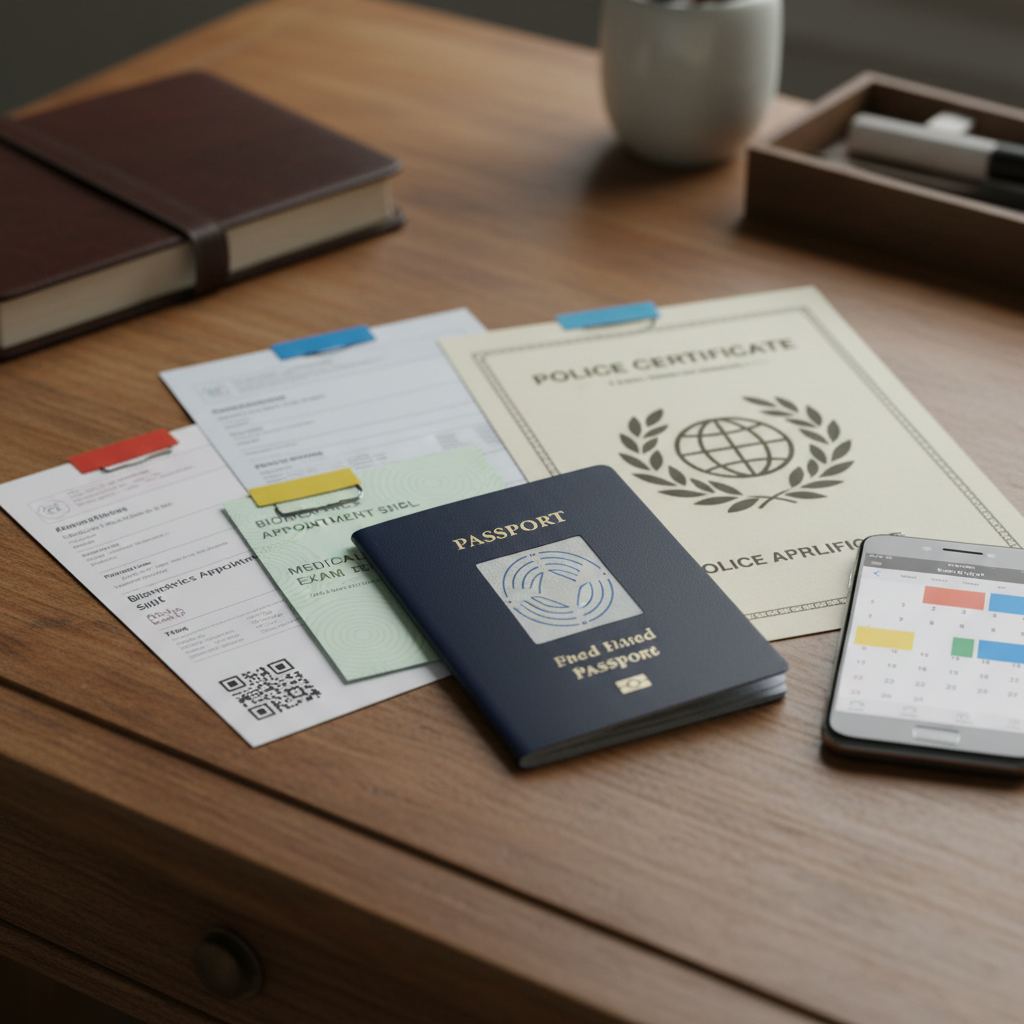
Identify the interview type (study, work, PR, or sponsorship), align your evidence to that pathway, and verify time-limited items like medicals and police certificates. Draft a one-page case brief and practice 10 core questions to eliminate surprises.
Different pathways test different things. Study permits emphasize program fit and funding. Work permits focus on job authenticity and NOC/TEER duties. PR assesses admissibility and long-term settlement plans. Sponsorship looks for genuine relationships and support. Calibrate your file to what the officer must decide.
- Identity basics: Primary passport, any previous/expired passports, national IDs, civil status documents, and name-change proof.
- Time-sensitive proofs: Biometrics confirmation, upfront medicals (mind validity windows), and police certificates.
- Program evidence:
- Study: LOA, tuition payment plan/receipts, GIC, semester calendar, DLI details.
- Work: Employer letter, LMIA or exemption code (e.g., IEC/IMP), job description mapped to TEER.
- Express Entry/PR: ECA, language tests, proof of work experience, settlement funds.
- Sponsorship: Relationship timeline, photos, messages/call logs, joint leases/accounts.
- Financials: Recent bank statements, tax returns, payslips, tuition and housing evidence, sponsor support letters where relevant.
- Travel plan: Appointment letter, itinerary, lodging, and return/continuation plans for temporary visas.
Create a one-page case brief summarizing who you are, what you’re applying for, 3–5 reasons you qualify, and where proof sits in your file. We use this in coaching to keep answers 20–30 seconds and evidence-led. If you’re unsure about eligibility or program fit, start with our profile assessment.
Step-by-Step Process
Use this 10-step routine: confirm official rules, map officer decisions, assemble a labeled file, script succinct answers, run two mock interviews, finalize logistics, set attire and mindset, pack backups, rehearse arrival, and debrief after.
- Confirm official rules (30–60 minutes): Venue address, ID requirements, device restrictions, and whether originals are required. Note biometrics/medical validity dates.
- Map officer decisions (20 minutes): List the 3–4 decisions they must make—eligibility, intent, ties, admissibility—and match two proofs to each.
- Build your document kit (1–2 days): Originals first, notarized copies second, grouped by identity, education, finances, employment, and family. Label tabs for fast flipping.
- Script consistent answers (45 minutes): Draft 10 answers that mirror your forms and letters. Keep it simple: who, what, when, where, how you can prove it.
- Run two mock interviews (60–90 minutes): One standard, one stress-test with clarifications. Record and time each response to stay under 60 seconds.
- Finalize logistics (30 minutes): Route, parking/transit, building entry, and a 15–30 minute buffer. Bring a printed appointment letter.
- Attire and mindset (15 minutes): Neat, conservative clothing. Practice calm breathing. Plan respectful, direct communication.
- Pack backups (10 minutes): Extra copies, simple snack, water (if permitted), pen, notepad, and a power bank.
- Arrival routine (15 minutes): Clear security, silence phone, review your one-page brief, and keep the top 12–15 proofs within reach.
- Post-interview notes (10 minutes): Write down asked questions and documents shown. If follow-ups are invited, you’ll respond faster.
| Step | Owner | Typical time | Output |
|---|---|---|---|
| Confirm rules | Applicant/consultant | 30–60 min | Checklist of venue + ID + validity |
| Map decisions | Applicant | 20 min | 4 decisions with 2 proofs each |
| Document kit | Applicant | 1–2 days | Labeled binder or folder system |
| Script answers | Applicant | 45 min | 10 concise responses |
| Mock interviews | Consultant + applicant | 60–90 min | Timing + clarity scores |
| Logistics | Applicant | 30 min | Route plan + buffer |
| Attire/mindset | Applicant | 15 min | Calm, professional presence |
| Pack backups | Applicant | 10 min | Copies + essentials |
| Arrival routine | Applicant | 15 min | Brief reviewed + top proofs ready |
| Post notes | Applicant | 10 min | Follow-up plan |
Want an RCIC to stress-test your answers? Book our immigration interview coaching. For PR-bound families, pair it with our PR family checklist; students can cross-check documents with our study permit checklist. Visitor applicants should confirm ties using this visitor visa documents guide.

Troubleshooting: What If…?
If you’re unsure, pause and clarify the question. Answer with facts you can prove, then show the document. If a record is missing, explain how you’ll provide it and by when. Keep every response consistent with your forms.
- Inconsistent dates or roles: Bring a single-page timeline. If you spot an error, correct it politely and note readiness to submit supporting proof.
- Previous refusal: Acknowledge it, explain what changed (new funds, program alignment, job stability), and show today’s stronger evidence.
- Language barrier: Ask for clarification. Use short sentences and avoid jargon. Ensure certified translations are in your file.
- Complex relationships: Present a simple relationship timeline, everyday photos, joint leases, statements, and travel stubs to show real-life integration.
- Intent questions: For temporary visas, show ties: employer letter, lease, property proof, semester schedule, and family responsibilities.
- Security or extra screening: Stay patient and provide precisely what’s asked—no more, no less. This keeps the review efficient.
When cases involve multiple programs or older filings, a quick audit prevents contradictions. Our Express Entry checklist helps you align work history, TEER codes, language scores, and proof of funds so the story holds together.
Advanced Tips (2026)
Lead with evidence, use the STAR method for experience questions, and keep responses under 60 seconds. Digital organization, labeled tabs, and a one-page brief reduce nerves and speed up officer review.
- Evidence-first: Start answers with proof: “My employer letter (page 3) confirms NOC duties that match my LMIA-exempt permit.”
- STAR stories: Situation, Task, Action, Result—45–60 seconds each. This keeps examples focused.
- Consistency sweep: Ensure IMM forms, resume, letters, and dates match. Fix small discrepancies before the interview.
- Practice sprints: Two-minute drills for 10 core questions sharpen clarity and recall.
- Label smartly: Use tabs by theme: Identity, Education, Finances, Employment, Family. Keep 12–15 proofs at the front.
- Well-being: Good sleep, light meal, hydrate, and arrive early. Calm brains remember details better.
For structured help, start with our eligibility checklist and then schedule a rehearsal through our assessment form. We’ve seen applicants improve coherence markedly after two focused practice sessions.
Frequently Asked Questions
Bring originals with labeled copies, keep answers brief and factual, and arrive early with your appointment letter. If you don’t understand a question, ask the officer to rephrase it before answering.
What documents should I bring?
Carry passport(s), biometrics and medical confirmations, police certificates, appointment letter, and your application forms. Add program-specific proofs: LOA and tuition receipts (study), employer letter and LMIA/exemption (work), or relationship evidence and sponsorship forms (family/PR). Originals in front, copies behind.
How should I answer tough questions?
Be concise, truthful, and consistent with your forms. If you don’t understand, ask for clarification. Anchor answers to documents you can show and avoid guessing. A short pause to think is fine.
Do I need a consultant for interview prep?
Not required, but an RCIC-led mock interview often catches gaps and strengthens confidence—especially if you have prior refusals or complex timelines. Coaching aligns your story with evidence.
What should I wear to an immigration interview?
Choose neat, professional attire you’d wear to a formal appointment. Closed-toe shoes and tidy grooming are safe choices. The goal is to look respectful and organized, not overly formal.
How long does an interview take?
Many interviews finish within 15–30 minutes, though complex cases can run longer. Plan a generous time buffer so you’re not rushed. Prioritize clarity and consistency to keep the meeting efficient.
Additional Resources
Pair official program rules with structured rehearsal. Read trusted overviews to understand decisions, then run one or two mock interviews so your proof and answers line up cleanly.
For a general perspective on interview structure and pacing, this short read on interview strategies offers practical reminders: ways to ace an interview. If you’re mapping long-term status, this overview of permanent residency steps helps you visualize the checkpoints: PR application process overview. Newcomers planning to work in tech can skim a skills refresher here: skills and qualifications in Canada.
Need tailored guidance? Start with our assessment form to book RCIC-led interview coaching at our Mississauga office.
Conclusion
Effective immigration interview prep blends organized evidence, consistent 30–60 second answers, and calm delivery. With a labeled binder and two focused mock interviews, most applicants minimize follow-ups and present a credible, verifiable story.
- Align every answer to proof the officer can see in seconds.
- Keep responses brief and consistent with your forms.
- Arrive early with originals in front and copies behind.
Key takeaways
- Build a one-page brief and a five-section document kit.
- Practice 10 core questions until each answer is under 60 seconds.
- Use tabs and flags to reach 12–15 key proofs instantly.
- Audit for consistency across forms, letters, and timelines.
- Schedule at least two mock interviews to reduce nerves.
Final CTA: Book a discovery session in Suite 403 Mississauga to rehearse with an RCIC at Ask Era Immigration.
